
Substack Has a Tate Problem — And Writers Are Fighting Back

By FAFO Newscast
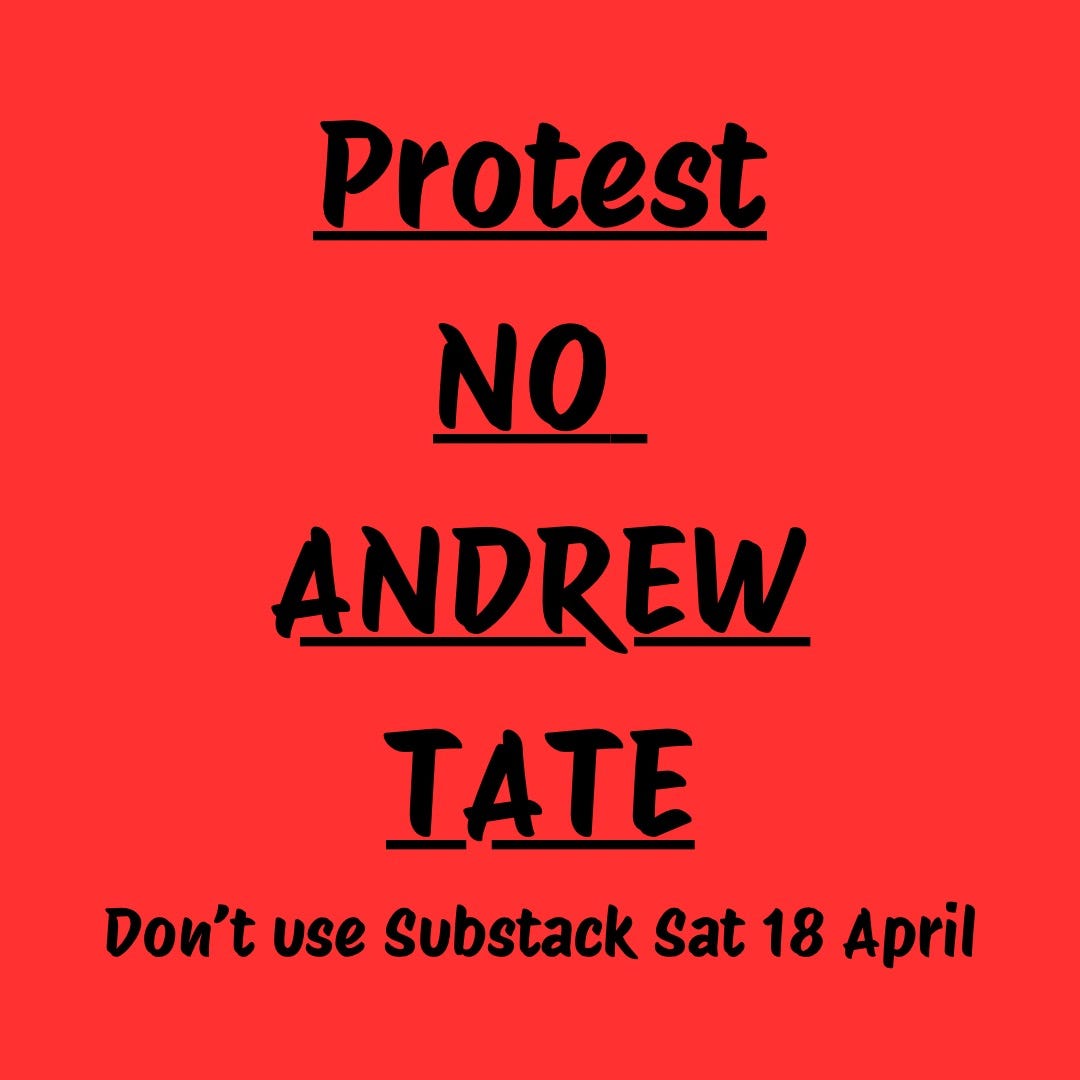
On April 18, a growing number of Substack writers are planning to go silent.
No posts.
No Notes.
No reading.
Some are even deleting the app.
It’s being called a Substack blackout—a one-day protest meant to send a very clear message:
Attention is currency. And creators are done spending it here without accountability.
The Trigger: Andrew Tate
At the center of this backlash is Andrew Tate—a figure as influential as he is controversial.
Tate, a former kickboxer turned online personality, has built a massive following by promoting hyper-masculinity and openly misogynistic views. He has also faced serious criminal allegations, including human trafficking and rape across multiple countries—allegations he denies.
That combination (extreme influence + extreme controversy) is exactly why his presence on Substack is sparking outrage.
For many writers, the issue isn’t just that Tate exists online.
It’s that Substack is giving him a platform and pushing that platform into their feeds.
“I Feel Assaulted”: Users React
Across Substack Notes, the reaction has been swift and emotional.
One writer described the experience of seeing Tate promoted on the platform as deeply distressing:
“I feel assaulted… now I am forced to interact with it to report and block it just to remove it from my home page.”
Another user questioned whether the exposure was intentional:
“Is that the point? Is this intentional?”
Others raised concerns about what they describe as a pattern:
“Substack has always had a Nazi problem… so it is no surprise that they allow predators like Andrew Tate on here.”
Many users say they immediately blocked and reported his accounts with some noting he appeared under multiple names. Others described the experience of even briefly viewing his profile as “gross” or “disturbing.”
One commenter summed up the frustration bluntly:
“Free speech is one thing. Rape and human trafficking is another.”
A Platform Problem, Not Just a Person

The backlash is not just about Tate, it’s about Substack’s broader approach to moderation.
Substack has built its brand on minimal interference, positioning itself as a platform for independent voices free from heavy-handed moderation.
But critics say that approach has consequences.
When users report seeing:
Controversial figures promoted in feeds
Multiple accounts tied to the same individual
Friction in blocking or reporting
…it raises a deeper concern:
Is the platform prioritizing growth and engagement over user safety and trust?
The Economics of Protest
The planned blackout is very strategic.
Substack depends on:
Writer output
Reader attention
Subscription retention
And creators are now leveraging that reality.
No posts = no content
No reading = no engagement
No engagement = no growth
Even a single-day disruption sends a signal:
👉🏾 Writers are not just users. They are the product.
👉🏾 And they can withhold that value.
The Risk for Substack
A one-day boycott won’t break the platform. But the sentiment behind it might.
Because what’s emerging is outrage and disillusionment.
Some users are already discussing:
Leaving the platform entirely
Moving to alternatives like Patreon
Reducing their activity
And once creators begin to detach emotionally from a platform, the long-term impact can be far greater than any one-day protest.
The FAFO Reality Check
Substack built its reputation on empowering independent writers.
Now those same writers are asking:
Empowerment for who? At what cost?
You cannot claim neutrality while amplifying voices many users associate with harm.
You cannot build community while ignoring who that community feels unsafe around.
And you cannot expect creators to continue investing their time, energy, and audience into a platform that they believe is not protecting them.
What You Can Do Right Now
For many users, this isn’t just a debate—it’s personal.
If you’re feeling overwhelmed, triggered, or simply frustrated by what you’re seeing on the platform, here are a few immediate steps you can take:
🧠 Take care of yourself first
If this situation is hitting close to home, step back.
Log off for a few hours—or the day
Mute or avoid triggering content
Reach out to someone you trust
Your well-being matters more than any platform.
🚫 Block and report accounts
If you encounter content or creators you don’t want in your space:
Use the block feature on their profile
Report content directly through Substack
You are allowed to curate your experience.
📣 Contact Substack directly
If you want your voice heard beyond Notes:
Email: support@substack.com
Use in-app reporting tools
Share feedback publicly (Notes, social media)
Platforms often respond when pressure becomes visible and sustained.
✊🏾 Participate—or don’t
The April 18 blackout is one way creators are responding.
You can join by logging off
Or you can stay and speak out
Both are valid.
What Happens Next
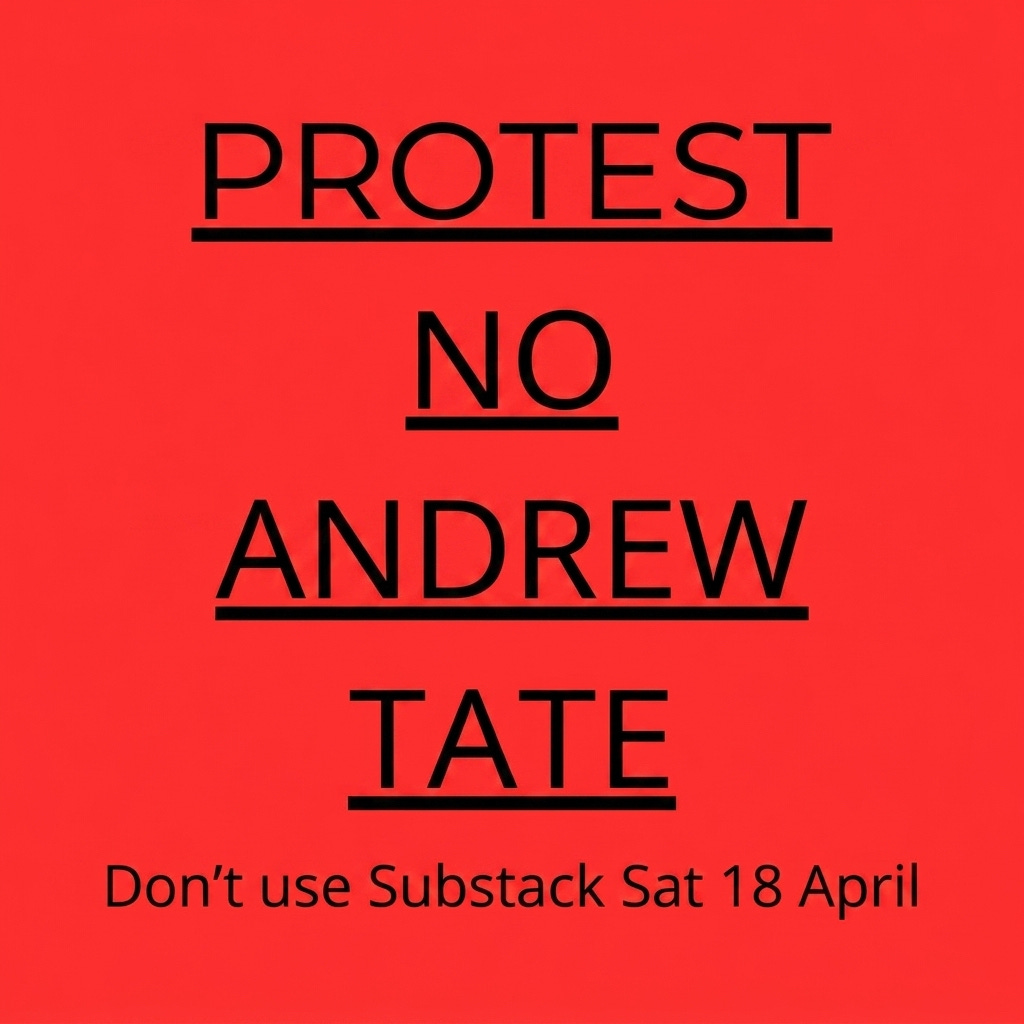
April 18 may come and go.
The platform will likely still be standing.
But something has shifted.
Writers are organizing
Users are speaking out
And the conversation is no longer contained
Substack owners must take the Andrew Tate seriously and address this issue immediately. Women on the platform deserves SAFETY.
Final Word
Substack told writers they owned their voices.
Now writers are deciding where—and whether—they want to use them.
And that decision?
Might matter more than any algorithm ever could.
Your opinion is important to us! Please subscribe, share, and leave a comment!
Thanks for explaining the reasons behind the Saturday 18th April boycott. I am going to share this post in my email newsletter that goes out Friday so that my readers are aware of the ongoing issue. Their safety is paramount.
Also I wanted to say (because I am AuDHD with very little concept of time, which may be the case for many other neurodivergent people partaking in the boycott!) that I am based in Aotearoa New Zealand and live in the future!
My timezone will be one of the first to live through the 18th April, so I will be online while others are boycotting, and offline before others are.
I guess that is just classic high masking over explaining..!
If writers tell their subscribers why they're off-line, maybe that would help.